
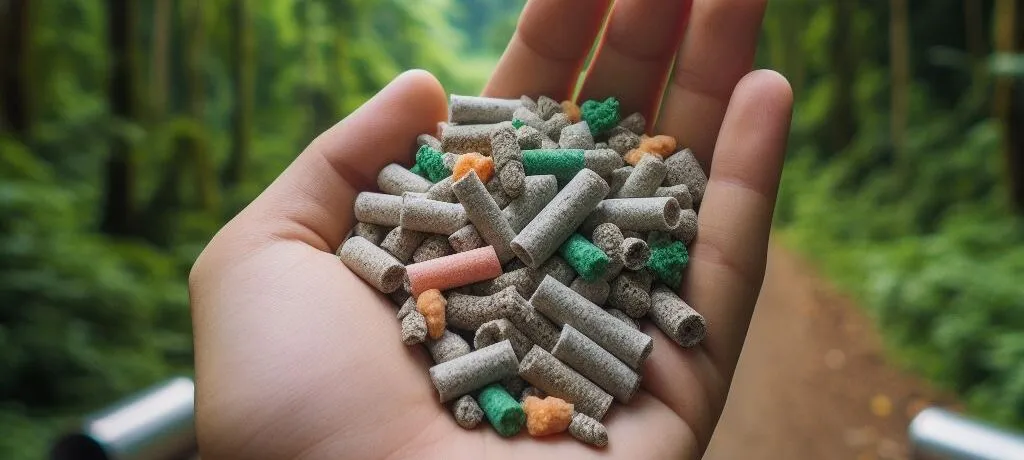
How Process Flow of RDF Pellet Production Line?
The process flow of an RDF pellet production line shares some similarities with the briquetting process but has key differences. Here’s a breakdown:

1. Pre-treatment:
- Shredding: Similar to Pellet, the starting point involves shredding raw RDF to a consistent size, usually below 80mm.
- Sorting and separation: Similar to Pellet, non-combustible materials like metal and glass are removed through various techniques.
- Drying: Unlike Pellet, drying is almost always essential for pellet production. High moisture content (above 10%) hinders binding and reduces pellet quality. Drying methods include rotary dryers, drum dryers, or fluidized bed dryers.
2. Grinding:
- After drying, the RDF undergoes further size reduction in specialized grinding mills, typically hammer mills or disc mills. This achieves a finer particle size (around 1-3mm) necessary for efficient pelleting.
3. Pelleting:
- Feeding: The finely ground RDF is fed into the pelleting machine.
- Pelleting process: The material is pressurized and heated within the machine. The heat softens the material, while pressure forces it through a die, forming cylindrical pellets. This process utilizes friction and natural binders within the RDF to solidify the pellets.
- Cooling: Similar to Pellet, the pellets are cooled to solidify and prevent breakage.
4. Post-processing:
- Screening and sorting: Oversized or undersized pellets are removed through sieves or screens.
- Packaging: Pellets are packed in bags or containers for storage and transportation.
Additional considerations:
- Binders: In some cases, additional binders like starch or lignin might be used to improve pellet strength and stability.
- Dust control: Similar to Pellet, dust control measures throughout the process are crucial.
- Emission control: Similar considerations apply regarding emissions control during combustion.
Benefits of RDF pellets:
- Superior handling and transportation: Pellets offer even better flowability and dust control compared to Pellet.
- Higher density and energy value: Due to the compaction process, pellets generally have a higher density and heating value than briquettes.
- Wider application: Pellets are commonly used in industrial boilers and power plants, offering greater market opportunities.
Challenges of RDF pellets:
- Higher investment: Pelleting technology and equipment generally require a higher initial investment compared to briquetting.
- Energy consumption: The pelleting process typically consumes more energy due to the grinding and high-pressure compaction involved.
- Moisture sensitivity: Fluctuations in moisture content can impact pellet quality and production efficiency.
RDF Pellet Machine
Ring die pellet machine is one of the most stable pellet machines with a large capacity. If you have hundreds of tons of raw materials supplied every day, this machine would be a good choice.
- The output of a single machine is 2,000KG/H-5,000KG/H, best choice for industrial pellet large-scale production.
- The compression ratio is adjustable and customization available.
- Modular mold, patent enlarged press roller, easy to maintain.
- 24 hours continuous operation.
- No binder needed; environment friendly.
- The maximum material size can reach 40 mm, saving the crushing pre-treatment cost.
Application Fields Of The RDF Pellet Machine
Energy:
- Power plants: Fuel source, co-firing or primary fuel.
- Industrial boilers: Process heat, steam generation, replacing fossil fuels.
- Cement production: Alternative fuel in kilns, reducing CO2 emissions.
- District heating: Fuel for centralized heating systems.
Beyond Energy:
- Biomass Pellet: Production from other biomass sources.
- Gasification, pyrolysis, biochar: Depending on processing technologies.
Benefits:
- Waste management and resource recovery.
- Sustainable and environmentally friendly.
- More competitive with traditional fuels.
- Contributes to a circular economy and low-carbon future.
Tags: